
Finding A Gem Down a Dark Dirt Road, Part 1 - (How To Properly Ship Vintage Tube Guitar Amplifiers: The Story)
Jan 19, 2026
While out of town over the holidays, I searched some classifieds ads (because I'd rather fund an entire website than post on Facebook, so I still search for gear as if it were 1999).
In doing so I found a 1966 Super Reverb. Granted, post CBS, but still more or less the golden era of Leo Fender's classic era that countless companies are still emulating under the word "boutique."
The amplifier had been purchased from Emerald City Guitars in 2008 by the owner who had used it a lot since. (On a personal note, Emerald City Guitars was one of the three places I learned about vintage amps from when I was 19 or 20 and they didn't have to be nice to me, but were. I obviously didn't have any money and they must have known I just wanted to play through a bunch of cool stuff in the store. They let me, and for that I will always speak highly of Emerald City Guitars, my favorite shop north of Norm's on the West coast).
The amp looked worn but the price merited questions at all times. One should not find an all-original '66 Super below $1500. Ever. Anything below $1500 has to have something wrong with it - original speakers lost forever or a replaced transformer or two, or a replaced cabinet or baffle board. You just aren’t supposed to find overwhelmingly original ’66 Super Reverbs below $1500.
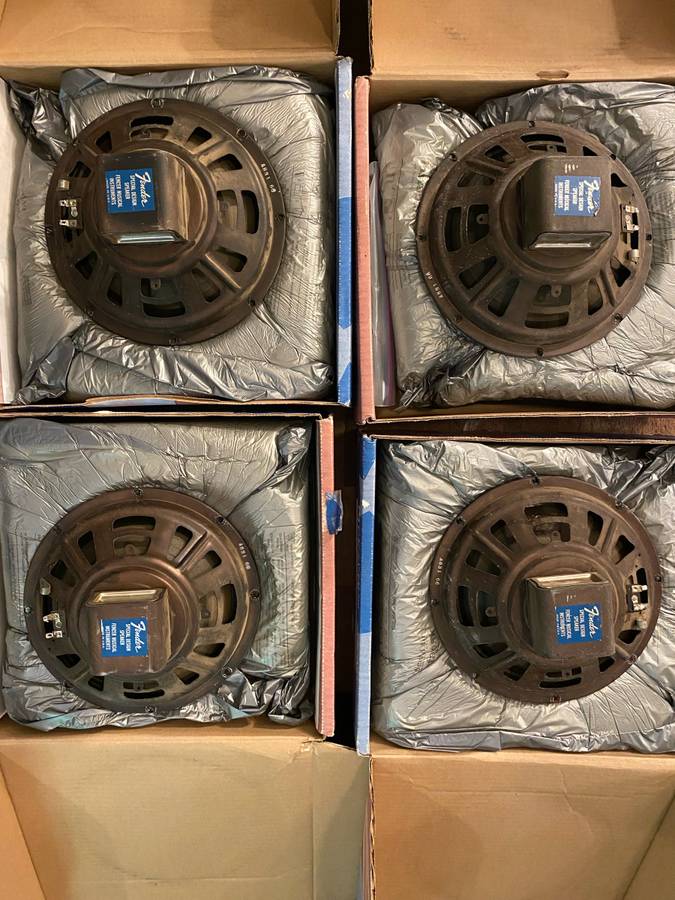
Transformer codes all checked out. It came with Eminence Lil Buddy's in the 4x10" cabinet but the original Fender "Special Design" branded CTS alnicos were included in the sale (all in need of a re-cone due to tears, which does affect originality value, but whereas in most cases the originals would be gone, these were not - he saved the speakers. Shortly after the Emerald City Guitars sale the cone age, tears, and decades of wear became audible as a rattle. The original packing slip indicated the replacements were ordered December 2008. When I’m done servicing the amp, it will probably merit sending the originals out for a proper reconing but intend to keep this as my personal amp with no intention of flipping it).
What I could tell from pictures looked promising so I sent a note and told him I was an unusual prospect. That I grew up in the area but live in Nashville, play guitar yet have a serious hobby that enables me to maintain, service, and take good care of the good stuff. I was prepared for the entire thing to go sideways at all times but after meeting him in person found an extremely transparent person.
To get there involved driving down a dirt road in the boondocks of the Pacific Northwest off of Hood Canal (after dark I might add), past a gate guarded by two dogs to a one-room structure that was his home with no running water. Yet the owner valued guitars and found a way to purchase gear, telling me what inspires him about guitar is that there is always a chance to get a little better and learn something new.
Right there is a lesson the guitar colleges won't teach and the influencers can't sell: valuing music in an age of devaluation. Paul Simon had to travel across town to the record store for the new Everly Brothers 45 RPM only get home and find out there was a skip in it. Lennon & McCartney had to find a bloke across the river who knew B7 to learn "the missing chord."
Ted Greene described the guitar as congruent with life's major lessons. Patience, devotion, hard work, seeing a job through to completion. John and Paul had to learn that B7 chord. There's a scene in the Running Down a Dream documentary where Tom Petty describes the moment he realized it was going to be a lot harder than he thought after arriving in Los Angeles. Where would we be without those who came before who valued music so much they gave their lives to the craft?
If the golden era of classic rock and age of big business that came to surround it is over forever, anyone can still value music.
Take the example of someone working as a cook at an oyster company restaurant, hauling jugs of water home from work for eight years on a piece of land purchased to get out of an apartment in Edmonds, WA while investing in dreams for the future. This is who I bought the Super Reverb from. You can be living in a one room house with no running water and still value music. If you can't change the world, maybe you should just change yourself to quote one of Tom's songs. This was homestead level living, yet he loves the guitar enough to invest in the gear that matters to him, has fun playing music in his band, and turned out to be a completely straight shooter by the time I posed the inevitable question from one player to another: Why are you letting the Super Reverb go?
After eight years of hauling water home from work, he’d just had his property drilled for a well. At 300 feet down they still hadn’t hit water so he had to decide whether or not to take the chance on continuing. At 340 feet they finally did. Running water is in his future.
He told me what he had paid for the amp in 2008 and I asked how the grill cloth got stained. He told me it was an accident at a Battle Of The Bands contest. “Either coffee or beer, I can’t remember.”
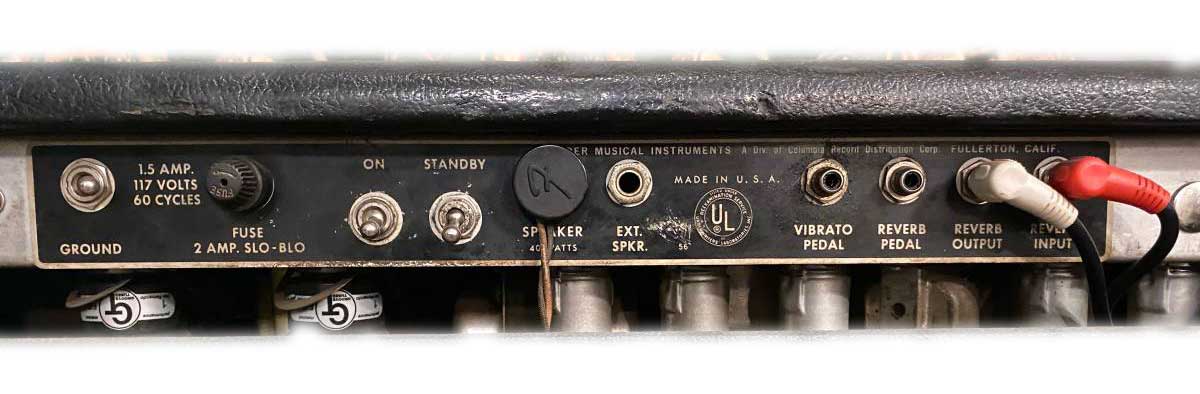
By the time I asked to unplug the amp from the power strip because I wanted to check the fuse rating in the back of the amp, he became more instead of less transparent. The first thing unscrupulous sellers do when an amp is drawing too much current and blowing fuses is stick a larger one in there to hide the problem. If a seller won't let you or doesn't like it, run. There was no reason to run.
After that I didn't just ask for permission, I actually asked for help removing the tube shields to inspect all preamp tubes and find out what he had in there: not new glass. Amperex, GE, JAN Philips. The sort of stuff people pay way too much money for from NOS vendors. We talked about tubes. He said he'd been told by a tech to save the money but he just couldn't resist buying some RCA black plates years ago for another amp. I get it. I'm a tube degenerate too.
I asked if he knew if the reverb tank was original or if it was a replacement. He said he thought it was original and said I could check but I didn't want to take hours upon hours of his time so I trusted him when he said it was and confirmed several days later: it is.
We also played through the amp to confirm it's in working order. Yes I'll service it gently after rebuilding a '65 Twin Reverb for the original owner who's next in line before personal projects, but this amp is just fine at the moment! Reverb nice and full. Tremolo in working order. Both channels functional and all switches operational.
"Now let's see what lurks within" - Uncle Doug
I didn't pull the chassis in his home because I didn't have to. When I did a few days later I was like a kid at Christmas. Two pots had been replaced, all others original (verified by the pot codes). The chassis reveals an amp that is "virtually unmolested" as Uncle Doug would say.
Screen resistors had been replaced along with the bias supply cap, filter caps, and dropping resistors. Cloth covered wiring throughout without being botched or screwed up by "drunk chimpanzees working on amps."
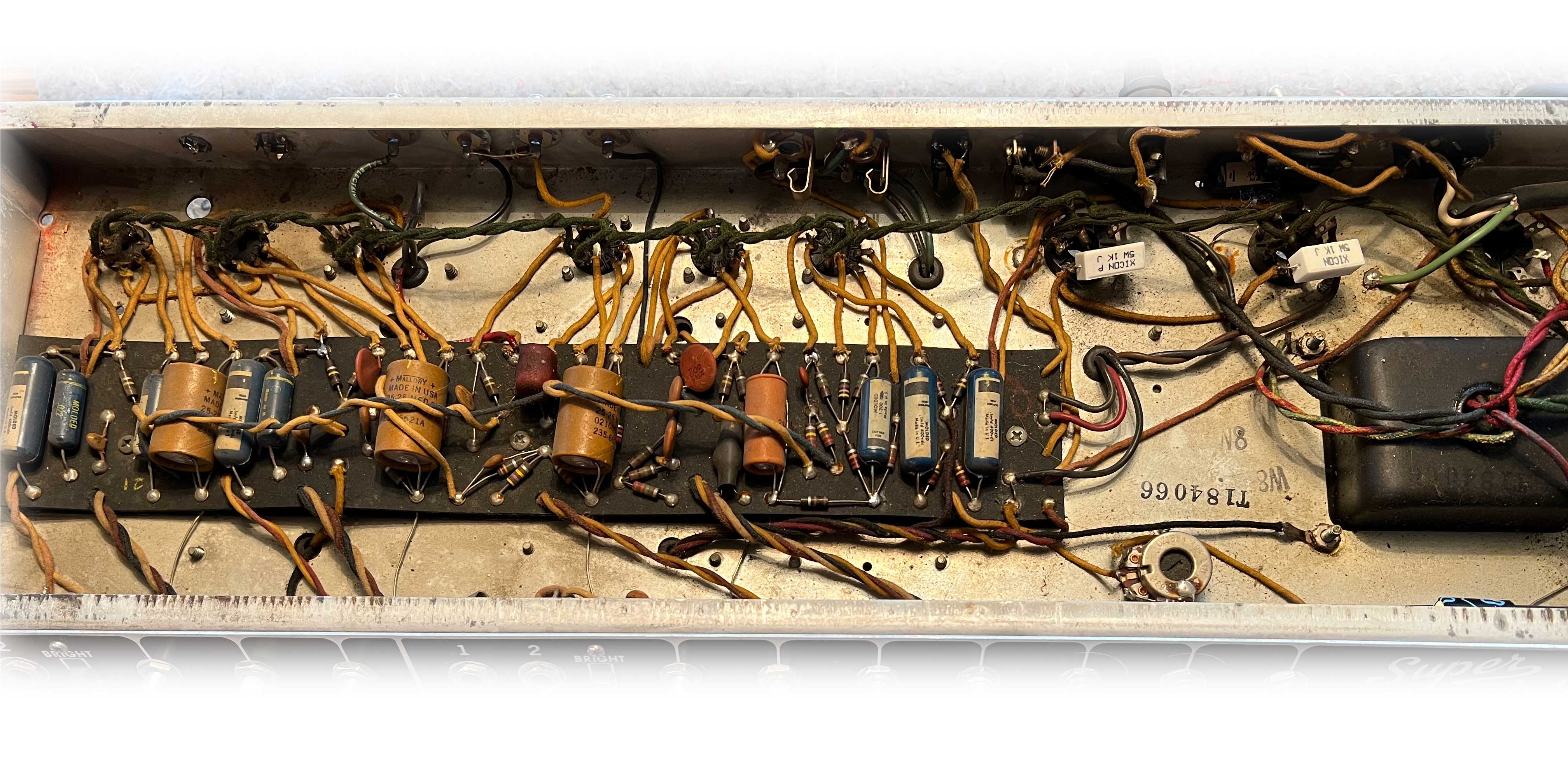 All the codes together date the amp to mid August of 1966 with a chassis from October and a tube chart date of November.
He told me which tech up here had done the service work. The guy saved the original parts in a bag contained in the speaker boxes.
Then after all this I asked, "why are you letting it go?" His answer was he needs to raise money to pay for the pump that comes next after having had the land drilled at last for running water from the well. "I need running water more than the amp and haven't gigged with it in 3 years."
In other words now it was a humanitarian act. The previous owner gets to install a pump for running water and I get an AB763 Super Reverb.
So now there's an amp to ship. Guitar Center would be better off to read how to ship an amp, so that what happened to a young friend's Twin Reverb in December 2025 does not keep happening. Shipping vintage Fender amps without proper precautions is like shipping a bowling ball inside of a box and wondering what happened. Here’s proof:
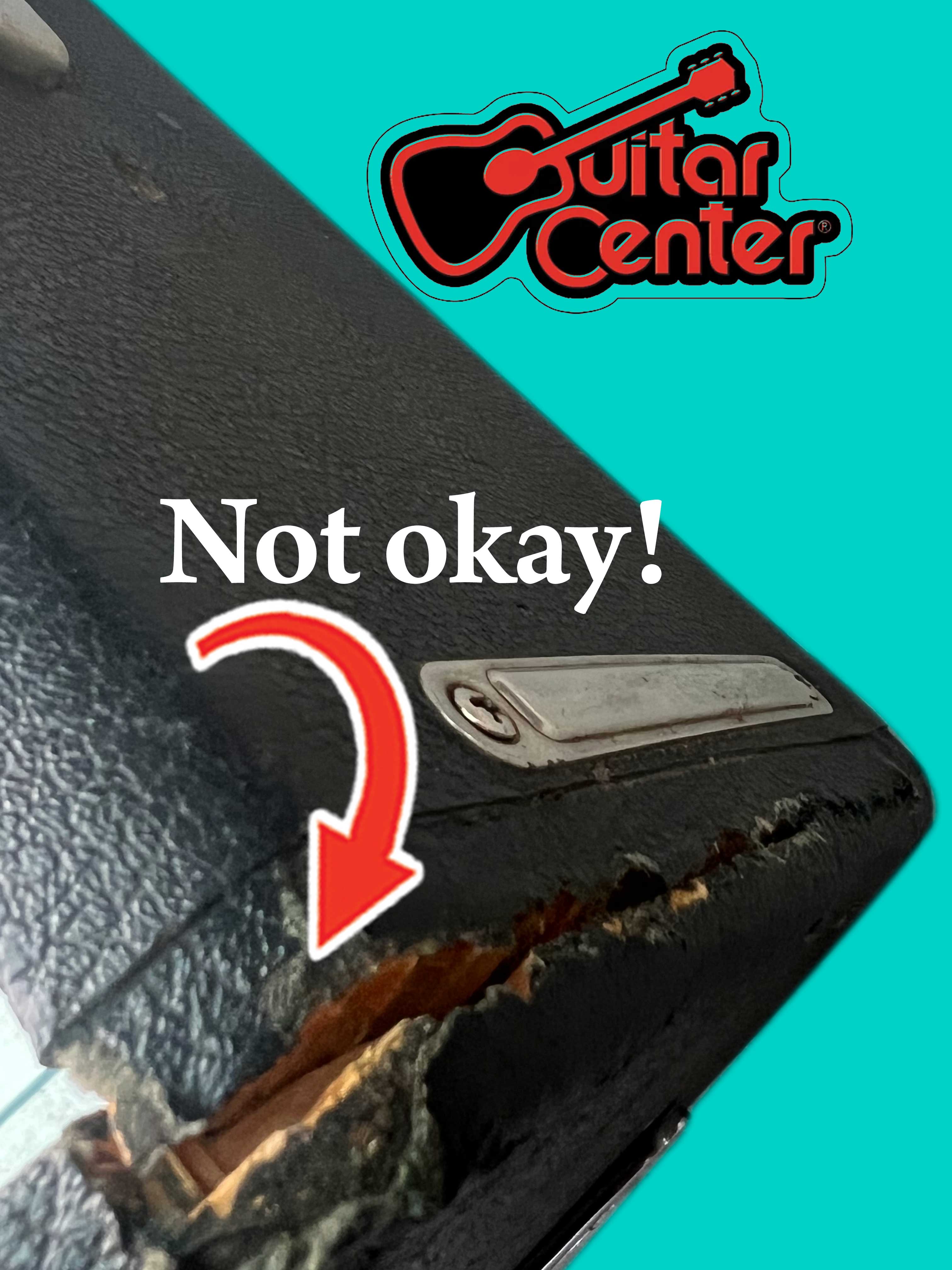
To make matters worse, it was my young friend's first vintage amp and he was excited, only to be let down and disappointed. It was only shipped from the Chicago to Nashville GC store and Guitar Center still didn't get it right. The weight of the power transformer jackhammered the cabinet apart until it was flexing apart upon lifting by the handle. Get it together Guitar Center.
I told the previous owner of the Super Reverb that sad story and it turns out the same thing had happened to him. From Guitar Center too. We arrived at the conclusion "Guitar Center shouldn't be allowed to ship vintage amps." In his case, it was an absolutely wrecked speaker baffle board, speakers in a pile inside the cab, and of course one of the speaker cones got torn too.
Shipping a tube amp (WELL) begins with something more basic, more simple, and alarmingly rarer: care.
Do we still care about these things? And if so, does that not come with a certain acceptance of responsibility to try to do our best? And if we've accepted the devaluation of musicians as "the way it is," why should anyone care anymore at all when the next one is wrecked in shipment.
Super Reverbs are big, they're loud, they're heavy, but you cannot load up a preset for driving down a dirt road to a house with no running water to a fellow tube degenerate's one-room home. You cannot profile stories for someone else to sell on the Internet. Miles Davis once said ”You can tell whether [a person] plays by the way he carries the instrument, whether it means something to him or not.” The greatest players all formed relationships with their instrument, and all relationships contain a story.
What is music if not an expression of experiences, and artists are purveyors of experiences. Or as Jackson Browne so eloquently put it, "voices in the darkness fashioning daylight out of song.”
Going down an unpaved road past the dogs at the gate for vintage gear, straddling the line between appreciation and economic recklessness all because you love the guitar that much, the win-win that comes from transparent experiences, and the common-ground that is still there for the taking can't be sold in the Rhett Shull profiler pack. "Down the street the dogs are barking and the day is a-gettin' dark" to quote a Dylan line. "A song is anything that can stand on its own two feet." There are no songs without real life and without real life there is no music that matters or endures. What have we gained? What have we lost? It's not even about tone anymore as much as humanity.
I asked about the Bassman head not for sale in the corner and he said "I have some friends with the modelers but still like the sound of old tube amps.”
Just as Uncle Doug laments drunk chimpanzees working on amplifiers, shipping a tube amp should be done assuming it will be handled by drunk chimpanzees in transit. We'll document why in the next post.
Join Our Mailing List For More Content
Join our mailing list to receive even more free content. Once I month I send out a free newsletter containing more inside tricks of the trade, anecdotes, and more. There is no commitment required and I offer this for free to anyone who finds value in these writings.
We hate SPAM. We will never sell your information, for any reason.
